Botox and Filler Training in Las Vegas
The 3-Day Aesthetic Injector Preceptorship at Body Balance Medical
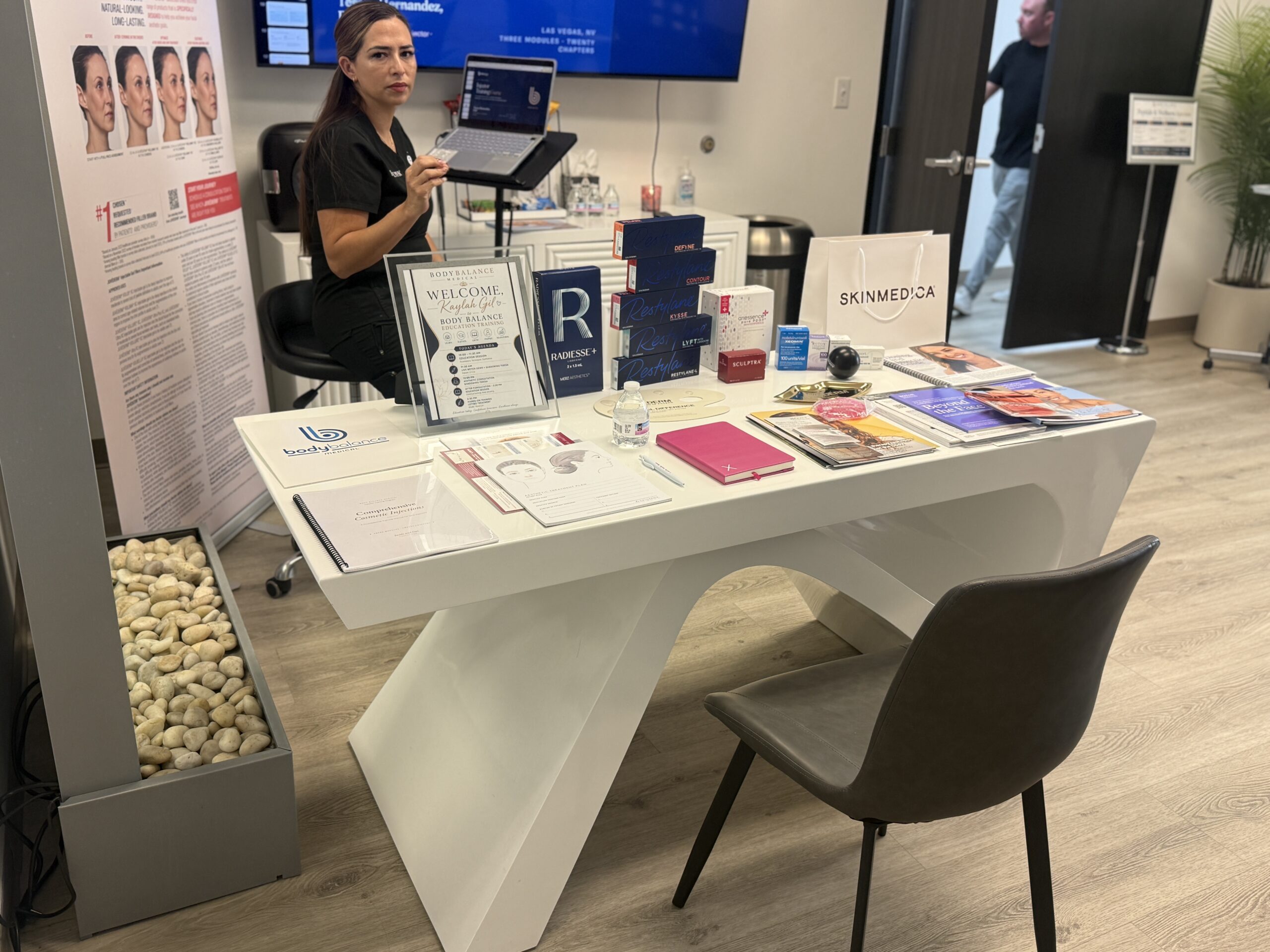
Clinical injector training for licensed medical professionals, taught inside a working medical aesthetics practice in Summerlin rather than a rented classroom.
What clinicians are actually asking when they search for injector training
If you are a licensed clinician looking for botox training in Las Vegas, Henderson, or Summerlin, you are usually weighing three things at once. Does this program fit what my license actually permits? Will I inject, or will I watch slides in a hotel ballroom? And will it prepare me to work safely under real clinical conditions rather than pass a quiz?
This page is written for medical professionals. Body Balance Medical's training runs inside the same clinic where neurotoxin treatments are performed on patients every week, and that setting shapes the kind of education you get.
Comprehensive injector training covers neurotoxin pharmacology, facial anatomy, patient assessment, injection technique, dosing, safety protocols, and complication management. What it does not do is replace your license, override your board's rules on supervision, or authorize you to practice outside your scope. No completion document from any program changes that.
What aesthetic injector training really involves
Injector training sits between your medical education and day-to-day aesthetic practice. It translates clinical skills you already have into neurotoxin and filler competency, which is why it matters regardless of how many years you have spent in nursing, primary care, surgery, or dentistry.
What legitimate training covers
- Neurotoxin and hyaluronic acid filler pharmacology, reconstitution, storage, and product selection across Botox, Dysport, Xeomin, Letybo, Juvederm, Restylane, Versa, and Belotero
- Facial anatomy with emphasis on vascular structures, danger zones, and tissue planes across the forehead, glabella, crow's feet, midface, lips, chin, jawline, and neck
- Full consultation workflow, including patient selection, history, contraindications, photography, and realistic treatment planning
- Injection technique: landmarking, depth, angle, needle versus cannula, and dosing strategy for common patterns
- Complication prevention, early recognition, and management, including when to escalate or refer
- Documentation, consent, and charting workflows suited to clinical practice
What training does not do
- Does not replace a nursing, PA, medical, or dental degree, and grants no new license
- Does not override your board's regulations on independent practice or supervision
- Does not guarantee employment at any practice
- Does not authorize injecting outside your credential or your employer's protocols
Scope of practice differs by license type
Any legitimate injector training has to work within the boundaries your license sets, and those boundaries are not the same for every clinician. The table below is a general orientation, not legal guidance.
| License | Typical injecting arrangement | What usually governs it |
|---|---|---|
| Physician (MD / DO) | Injects within licensed scope. Often serves as medical director, setting protocols and supervising allied clinicians. | State medical board standards and malpractice carrier requirements |
| Nurse Practitioner (NP / APRN) | Generally injects within APRN certification. Latitude varies with practice setting and employer arrangement. | State nursing board rules, APRN certification, clinic protocols |
| Physician Assistant (PA-C) | Injects under physician supervision or delegation, within standing orders and collaborative plans. | Supervising physician protocols and state PA regulations |
| Registered Nurse (RN) | Typically injects under physician or APRN oversight, with documented training and competency. | State nursing board guidance, medical director protocols, employer policy |
| Dentist (DDS / DMD) | May use neurotoxins and fillers within dental and peri-oral indications where the dental board permits. | State dental board rules, including any required course hours |
This table is a general orientation only. Requirements change, and they differ by state. Confirm your current obligations directly with your licensing board and your malpractice carrier before beginning aesthetic practice. If you are licensed outside Nevada, your home state's rules govern what you can do when you return.
Foundational and advanced training are not the same product
Search results mix entry-level and advanced courses without distinguishing them, which is how clinicians end up in a room pitched at the wrong level. Choosing well starts with an honest read of your own baseline.
Foundational training
For clinicians new to aesthetics, or with limited injection exposure outside settings like the ER, ICU, primary care, dentistry, dermatology, or plastic surgery.
Assumes: strong general medical knowledge, a license in good standing, comfort with needles and sterile technique. No prior aesthetic injection experience needed.
Covers: core neuromodulator and filler indications for the upper face and simple midface cases, safe dosing and dilution, injection patterns for the forehead, glabella, and crow's feet, basic lip and cheek filler approaches, and structured assessment and charting.
Advanced training
For injectors already working in aesthetics who have completed foundational training and treat patients regularly.
Assumes: comfort with standard upper-face neurotoxin patterns, experience with straightforward filler treatments, and familiarity with aesthetic consultation and follow-up.
Covers: lower-face contouring across the jawline, chin, and peri-oral regions, full-face assessment and multi-session treatment planning, managing challenging anatomy or previous filler, and collagen stimulators such as Sculptra and Radiesse.
The Body Balance Medical preceptorship is tailored to the participant rather than fixed at one level. Your training plan is built from what you tell us you want to work on, which means the same three days look different for a new injector than for someone refining lower-face technique.
Preceptorship, certification course, or weekend seminar
These formats market themselves in nearly identical language and differ substantially in what you walk away with. Understanding the difference matters more than the price comparison.
| Clinical preceptorship | Certification course | Weekend seminar | |
|---|---|---|---|
| Setting | Active clinic with real patients | Classroom or clinic, varies | Hotel or conference space |
| Duration | Multiple days, often 3 or more | 1 to 3 days | 1 to 2 days |
| Group size | Small, low instructor ratio | Moderate | Large |
| Hands-on time | Substantial, scope permitting | Varies widely | Limited |
| Clinic workflow | Observed start to finish | Usually not covered | Not covered |
| Complication depth | Case-based, in context | Didactic coverage | Usually surface level |
| Individual feedback | Direct and ongoing | Some | Minimal |
| What it is not | None of these three change your legal scope of practice. A private completion document records training, not licensure. | ||
Programs vary within each format. Use this as a frame for asking better questions, not as a verdict on any specific course.
How to evaluate an injector training program
Clinicians are right to be skeptical of marketing-heavy injector courses. Las Vegas has several, and the quality range is wide. What to look at:
- Trainer background. Years in aesthetics, whether they still practice, teaching experience, and reputation among local injectors.
- Setting. A working medical aesthetics clinic with real patients, versus a rented room and mannequins.
- Curriculum depth. A specific agenda covering anatomy, safety, and complication management, not just lips and foreheads.
- Hands-on terms. A straight answer about when participants may inject, what qualifies them, and what happens if they do not qualify.
- Scope honesty. Explicit acknowledgment of board rules and supervision requirements by license type.
- After the course. Whether follow-up questions are welcome, or the relationship ends when the weekend does.
- Transparency. Clear pricing, duration, and a plain list of what is and is not included.
Any program suggesting a short course alone lets you practice independently. Any program guaranteeing income, patient volume, or job placement. Any program training people whose licenses do not permit injecting. Any trainer bio without a clear clinical background you can verify.
The Body Balance Medical 3-Day Aesthetic Injector Preceptorship
Three days of structured injector training for licensed clinicians, held inside an operating aesthetics practice in Summerlin. Tuition starts at $3,900. Enrollment is application-based with limited seats.
This is a clinical preceptorship, not a certification course. Completion documentation records your training hours and the topics covered. It does not replace state licensure, board requirements, employer protocols, or medical director requirements.
Your trainer

Teresa Hernandez, MSN FNP-BC
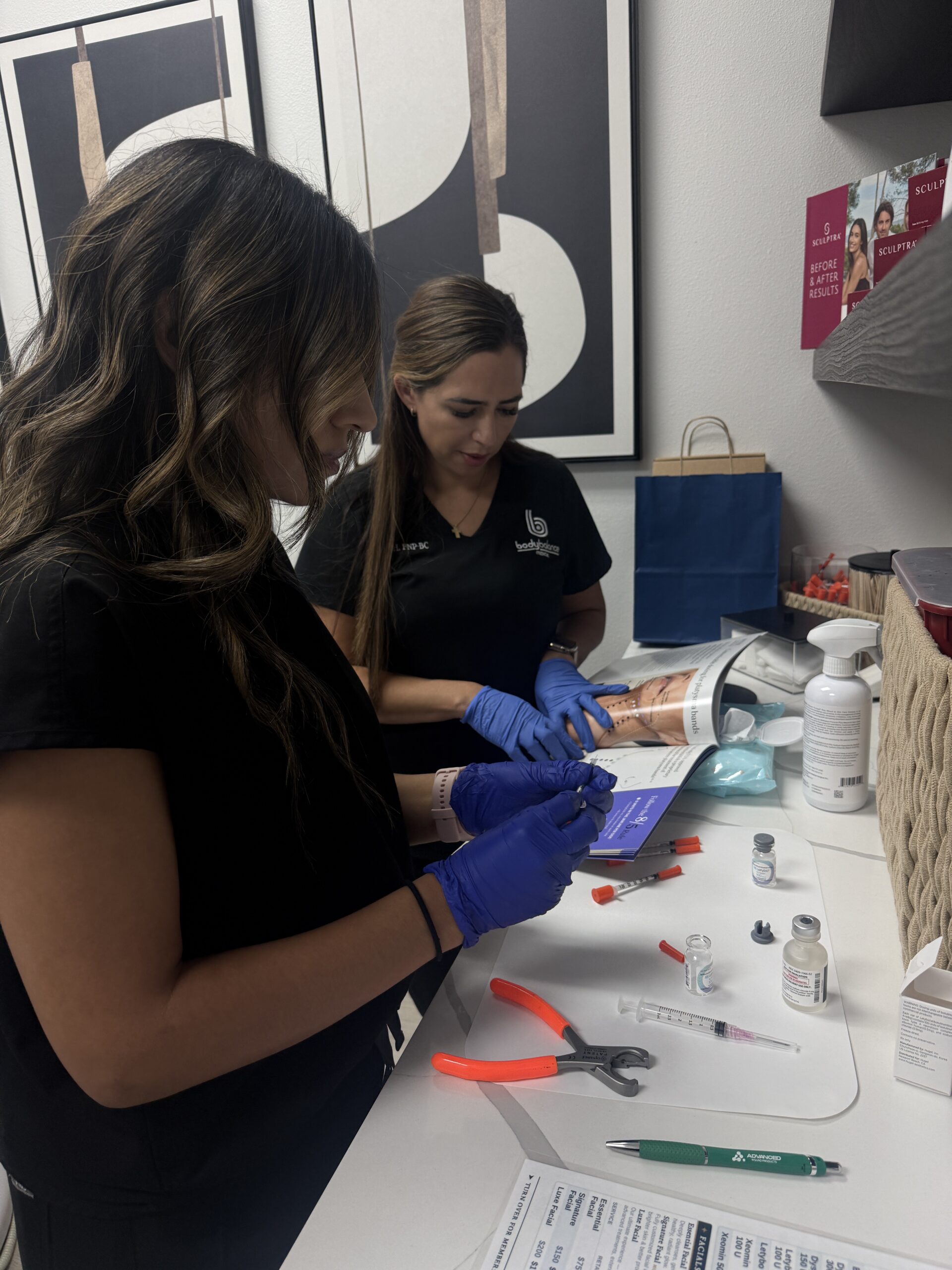
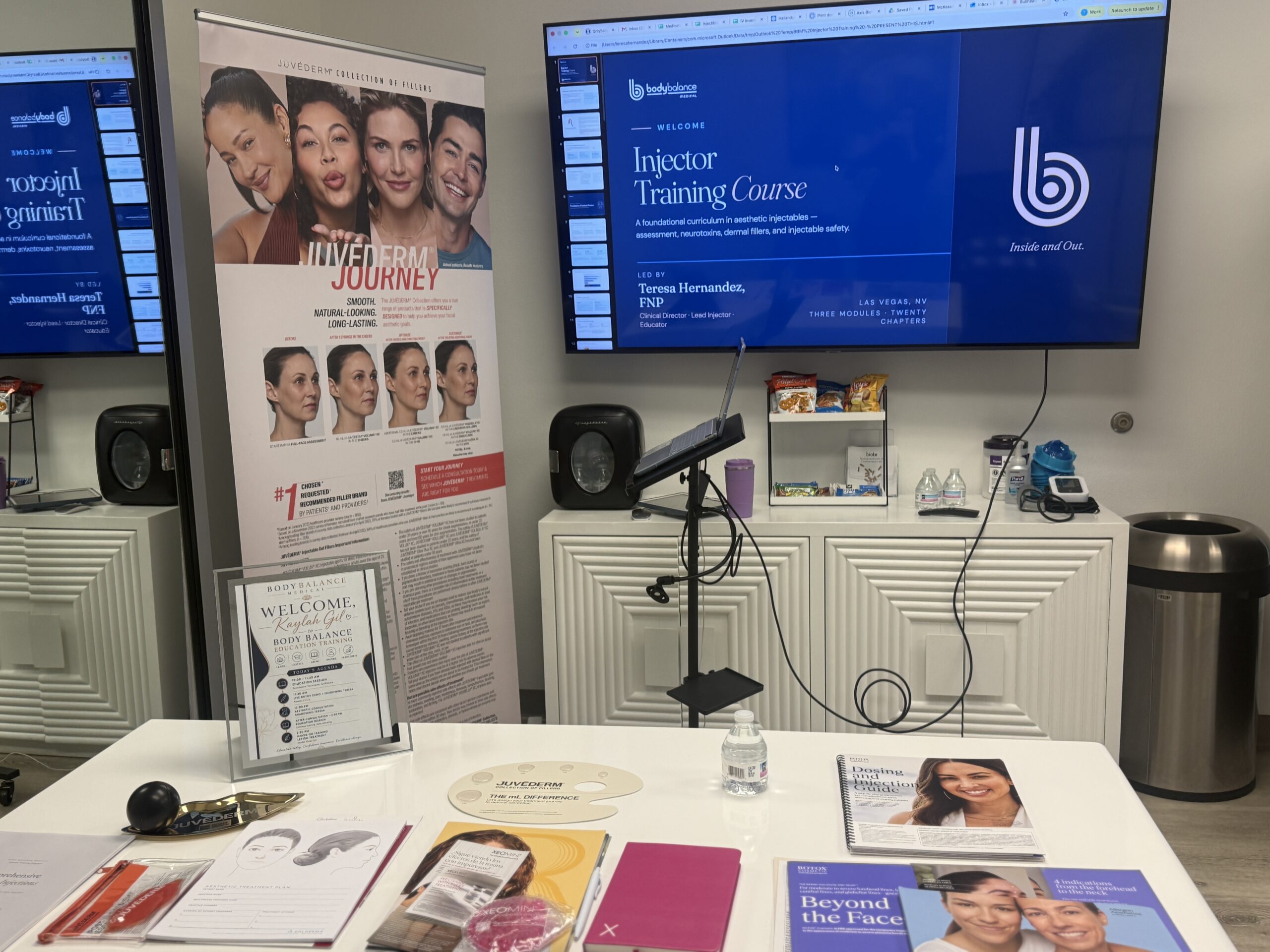
Teresa has spent six years as a cosmetic injector, four of them also training other injectors. She teaches basic through advanced injection technique at a local aesthetics school alongside running this preceptorship, and she is a Biote-certified provider.
Participants learn how an experienced injector thinks through a case, not just where the needle goes. Assessment, product selection, patient readiness, dosing strategy, risk awareness, and follow-up care. More about the team.
What the three days cover
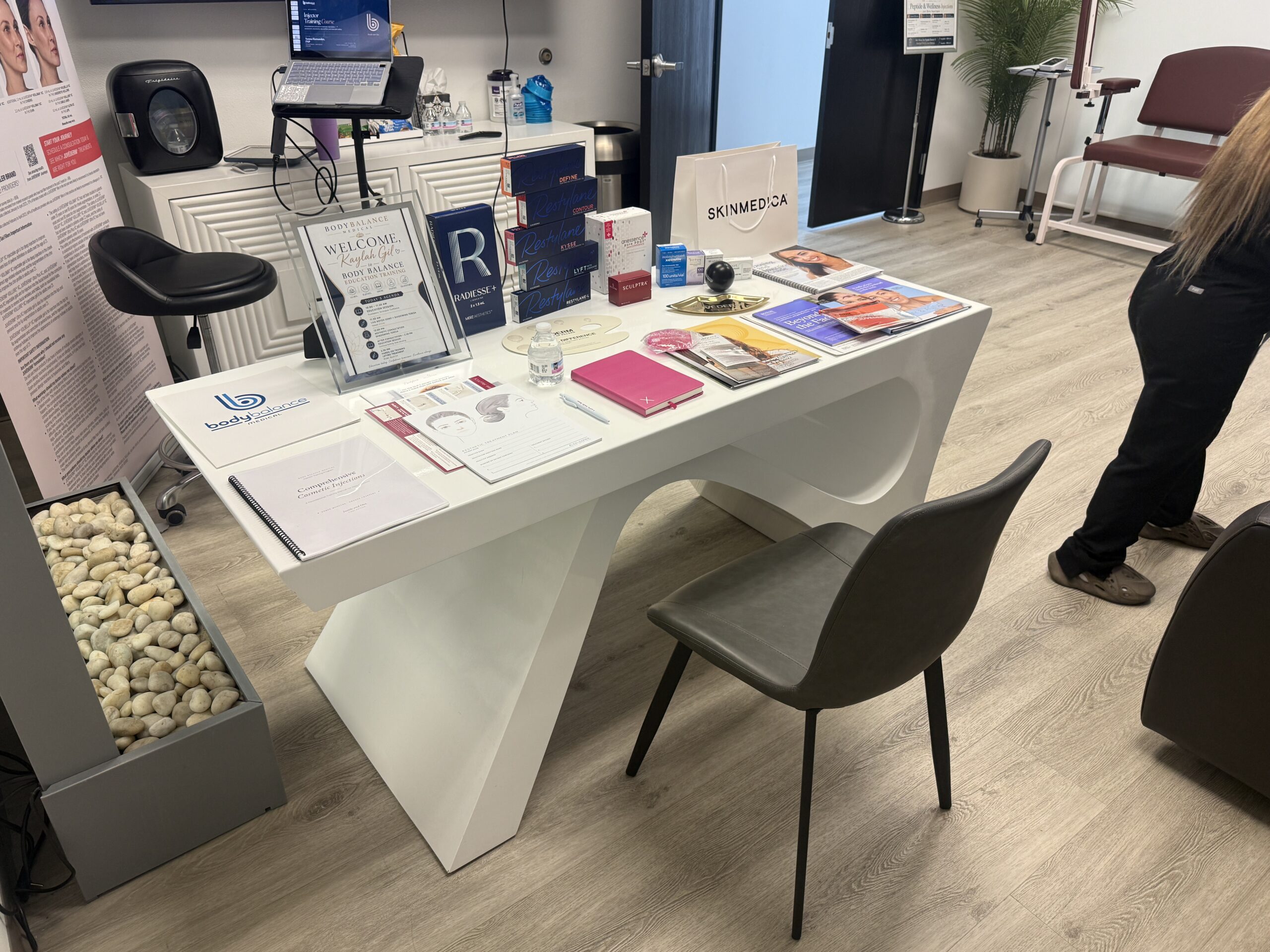
Day one: foundation and clinical workflow
- Neuromodulator science, reconstitution, handling, and storage
- Facial anatomy with emphasis on upper-face zones and danger areas
- Live consultation and treatment planning observation
- Consent, photography, and documentation workflow
Day two: injectable fundamentals and live exposure
- Dermal filler fundamentals and product selection
- Technique for cheeks, nasolabial folds, and lips, with emphasis on vascular safety
- Aftercare and follow-up instruction
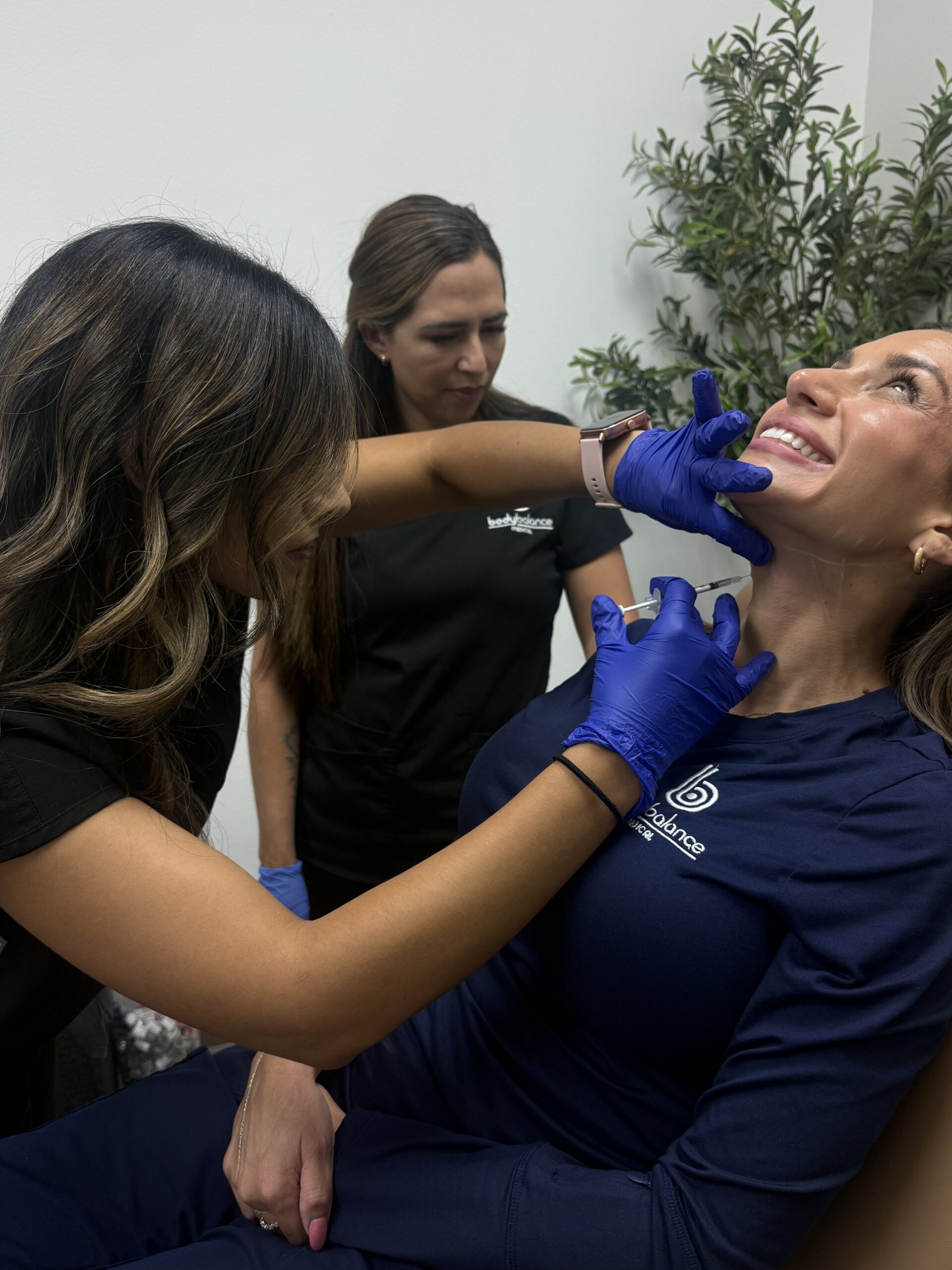
- Supervised technique work for participants whose scope and readiness allow
Day three: integration and professional readiness
- Case-based treatment planning and complication scenarios
- Lower-face contouring and combination treatments with collagen stimulators
- Charting review and treatment note structure
- Individual feedback and next-step guidance
Day-to-day content depends on participant qualifications, readiness, and model availability at the time of training. You tell us what you want to work on before the program starts, and Teresa builds around it. Training runs at Body Balance Medical, 7975 W Sahara Ave #101, Las Vegas, NV 89117.
Hands-on model participation is conditional, not automatic
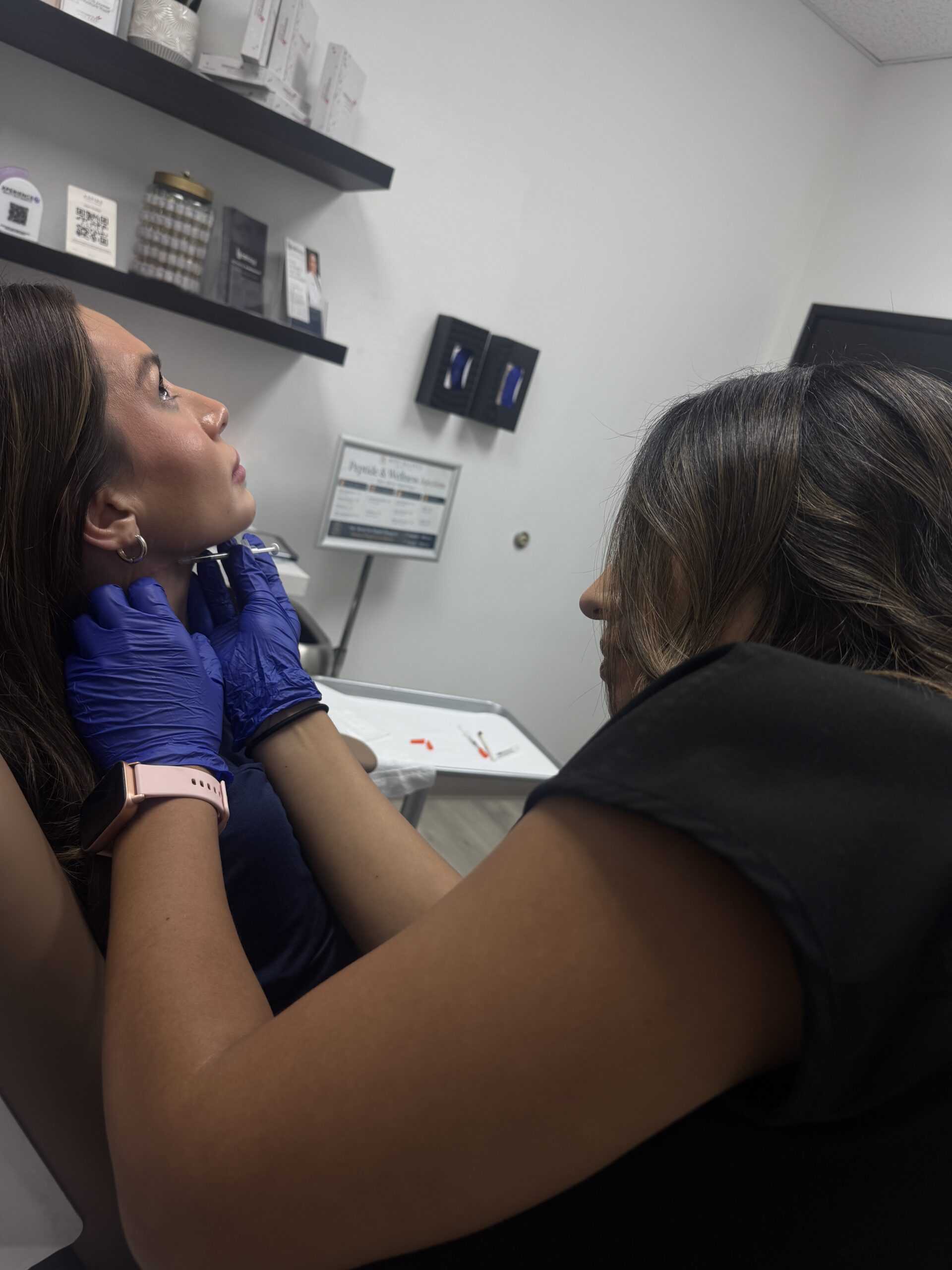
Qualified participants may have the opportunity to perform supervised injectable treatments on model patients during the preceptorship. That opportunity is never guaranteed, including for clinicians who otherwise qualify.
What determines it
- Licensure type and status, and whether it permits injecting in this setting
- Existing injection and patient care experience in your primary specialty
- Model availability on your training dates, and informed consent for trainee participation
- Teresa's real-time assessment of clinical readiness and technical safety
- Applicable supervision requirements while you are in the clinic
Every participant observes complete treatments start to finish regardless. Clinicians who do not inject live models still get consultation observation, guided case discussion, assessment review, treatment planning, documentation review, and direct clinical Q&A.
Who can apply
The preceptorship is built for licensed clinicians who can travel to Las Vegas for three days.
- Registered Nurses
- Nurse Practitioners
- Physician Assistants
- Physicians (MD / DO)
- Dentists (DDS / DMD), where their board permits
- Other licensed professionals, case by case
Applicants provide proof of an active, unrestricted license and current malpractice or employer-provided coverage. Acceptance depends on credentials, experience level, scope of practice, training goals, and seat availability.
Clinicians licensed outside Nevada are welcome. Training here does not change what you may do at home, so your own state's rules govern your practice when you return.
How the application works
- Apply online. The application covers license type, experience, what you want to get out of the training, and your general timing.
- We review it. Usually a couple of business days. You hear back either way.
- Accepted applicants are invoiced and complete a short training plan form that tells Teresa what to build your days around.
- Dates are confirmed once payment clears, scheduled around the availability you gave us.
What you can reasonably expect
No program can guarantee patient outcomes, employment, or income, and any that does is telling you something about itself. What structured training can reasonably build:
- A clearer approach to evaluating neurotoxin and filler patients from consultation through follow-up
- Better injection planning for common neurotoxin patterns and introductory filler cases, grounded in anatomy
- More confidence in patient conversations about risks, benefits, and realistic expectations
- Practical familiarity with documentation standards, photo workflow, and consent processes
- A concrete sense of which advanced areas to pursue next
Common questions
How much does the 3-day injector training cost?
Tuition starts at $3,900 for the full three days. That covers didactic teaching, observation, supervised clinical time, and training materials. Travel, lodging, and meals are yours. Final cost may vary with optional add-ons.
Is this enough to start injecting on my own?
No program by itself authorizes independent practice. You follow your state licensure, board regulations, employer protocols, and any medical director oversight regardless of what training you complete. What the preceptorship provides is structured instruction and supervised practice within those boundaries.
Do I need prior aesthetics experience?
Helpful, not required. The program suits clinicians new to injectables who already have strong general clinical skills, and it suits working injectors who want to refine technique or move into advanced areas. Your training plan form tells us which you are.
Will I receive a certificate, and what does it do?
You receive documentation of completion recording your training hours and topics covered, which you can provide to employers, medical directors, or malpractice carriers as part of a credentialing file. It is not a state or board certification and does not expand your legal scope of practice.
Am I guaranteed to inject during the training?
No. Hands-on model participation depends on your license type, your clinical readiness, model availability, informed consent, and trainer approval. Participants who do not inject still observe complete treatments and take part in case discussion, treatment planning, and documentation review.
How far ahead should I apply?
Seats are limited and review takes a few days, so several weeks to a few months ahead of when you want to train is reasonable. Dates are not published as a live calendar. Submit the application and we will send current availability.
I am licensed outside Nevada. Can I still attend?
Yes. Hands-on participation still depends on the same eligibility factors, and training here does not change your scope at home. Your own state's rules govern your practice when you return.
Apply for the next training date
For RNs, NPs, PAs, physicians, and dentists ready to build or sharpen injectable skill inside a working Las Vegas clinic, taught by an injector who still treats patients every week.
Apply for the PreceptorshipCall or text (702) 417-1261